Unlock Real Love. Connection. Freedom
Consulting, music, and experiences that help self-aware people apply what they already know and choose what they really want.
The Real Reason You're Here
You have felt the numb heart.
It forms when you know what you want but keep settling for something else. Not from lack of clarity, but from the fear that what you want may not exist for someone like you.
Over time, instinct quiets. Feeling dulls. Practical replaces desire. Familiar starts to seem safer than honest risk. Love is still wanted
but the heart withdraws. This shows up most clearly in relationships but it touches work, creativity, and life direction too.Self-betrayal hurts deeper and longer than heartbreak.
This is your moment to choose again.

Going After What You Want
Most people already know what they want. What stops them is settling for less under emotional pressure.Wanting shows what matters. Decisions confirm what stays.Adora uses music to help people feel what they want and consulting with The Aiza Method™ to guide them to it.Fate is not found. It’s chosen.
What Changes
When You Stop Settling.
This is the moment things change.Press Play to Hear Audio→
Signature Work
Live Velvet Passport Concerts

Live Music Experience
Sensory Keynote Concert with original music that awakens connection and ignites desire.
Bespoke Consulting - The Aiza Method™

Private Consulting
A proven framework for mastering choice under emotional pressure, especially in love.
Results That Speak for Themselves
Performance Guest, Director, Los Angeles"I walked into Adora’s show numb and walked out alive. The music opened my heart, and by the end of the night I was holding hands with the man who became my soulmate."
Couple, Private Session, Milan"We came to Adora stuck in old arguments. She gave us tools that shifted everything. Today, we are not only more in love, we are aligned in our vision for legacy love."
Male Client, CEO, Dubai"Adora showed me how to stand in my masculine energy without force. For the first time, I feel a woman trusts me to lead. Our relationship feels effortless and powerful."
Performance Guest, Tech Founder, New York"The experience was magnetic. I did not just hear the music, I felt it in my body. It reminded me what desire really is, and days later, I met someone extraordinary."
Female Client, Entrepreneur, London"I had success in business but disappointment in love. Adora helped me release old patterns. Within months, I met the partner I now call my future husband."
The next testimony should be yours.














Resources while you decide what you want...
These resources help you heal and decide. The rest of the site is for actions to get what you want now.


The Adora Aiza Promise: Every experience leaves you more connected, more alive, and closer to what you truly want.
Get in Touch
Velvet Passport
Sensory Keynote Concert
Intimate. Acoustic. Transformative.Adora Aiza’s voice moves beyond sound and into the body.
Each interactive performance opens the heart, awakens desire, and draws guests into real connection that lingers long after the night ends.
Seats are limited. Priority access via guest list.
Private performances available by inquiry.

1:1 Bespoke Consulting
Invitation-only consulting for those who require absolute discretion and lasting change.
The Bespoke tier of The Aiza Method™ offers private access, a 90 day tailored strategy, and direct guidance for individuals and couples who will not settle for ordinary connection.Designed for leaders, visionaries, and those ready to choose differently.
All applications are reviewed personally.
Architect of Love.
Creator of The Aiza Method™. Visionary Artist.
Adora Aiza is an international artist and consultant, and the creator of The Aiza Method™, an action-based framework designed to help self-aware people stop acting against what they already know and choose what they truly want, especially in love.
Her work focuses on decision-making under emotional pressure. Through lived experience, real-world action, and pattern recognition, Adora helps individuals and couples confront their habits, refine their standards, and move with clarity instead of hope, attachment, or avoidance.The Work
Most people already know what they want.
What holds them back is not lack of insight, but what happens when emotion, attraction, and uncertainty are involved.
The Aiza Method™ is built around action.
Rather than endless analysis, the work places people in real situations where their patterns surface naturally. Dating, relationships, and choice become the training ground. Through action, people learn to identify what they tolerate, where they compromise, and how often they betray their own standards without realizing it.
Over time, clarity sharpens. Standards rise. Choices become cleaner.
As behavior changes, magnetism increases naturally. Not through performance, but through consistency and self-trust.
This is not theory. It is lived calibration.Velvet Passport
Velvet Passport is Adora’s signature concert experience. An intimate, sensory performance series designed to awaken feeling, presence, and desire.
Blending soulful vocals, emotional depth, and atmosphere, Velvet Passport transforms music into a shared experience that softens armor and restores aliveness. Where consulting challenges behavior and choice, music reconnects people to sensation and truth in the body.
These experiences are designed to linger long after the night ends.
Private performances are limited and offered by invitation or inquiry.Global Presence
Adora Aiza’s voice and work have reached audiences across Europe and North America, spanning festivals, private salons, curated cultural spaces, and large-scale stages.
Her performances and collaborations have been featured at MetLife Stadium, Mindvalley, Elevation Barn, Red Bull, and in venues associated with Times Square Billboard placements. Her audience includes artists, leaders, creatives, and visionaries drawn to depth, elegance, and emotional truth.The Philosophy
Romantic love is the ultimate luxury.
Not because it is rare, but because it demands discernment, courage, and self-respect to experience fully. Real love is not found accidentally. It is chosen repeatedly through action.
When lived well, love leaves a legacy. It sets a standard. It inspires love in others simply by being witnessed.
At the same time, access to the heart is not free.
Love can be felt and admired, but intimacy is earned. Trust is built through consistency. Presence is proven through action. A full heart does not mean open gates. It means clear standards and conscious choice.
This philosophy guides every aspect of Adora’s work. To end the reign of the numb heart. To replace settling with clarity. And to remind people that the most powerful freedom is choosing love without betraying yourself.The Promise
Every experience, whether consulting or performance, is designed to sharpen clarity, restore feeling, and move you closer to what you truly want through action, not abstraction.

Love Resolutions;
Get Your Heart Ready for Fulfilling Romance
The Love Resolutions book is the first step in awakening the heart for true romance. Inside, discover timeless principles that restore desire, release past patterns, and prepare the soul for soulmate-level love. The book also supports healing from grief and disappointment at your own pace, clearing the way for clarity in the kind of love you want to call in. Many readers report meeting their person or experiencing profound shifts shortly after completing the practices.Whether you begin with the free digital gift below or invest in the premium Audiobook and Print editions, your journey starts here.All formats also available in Italian.


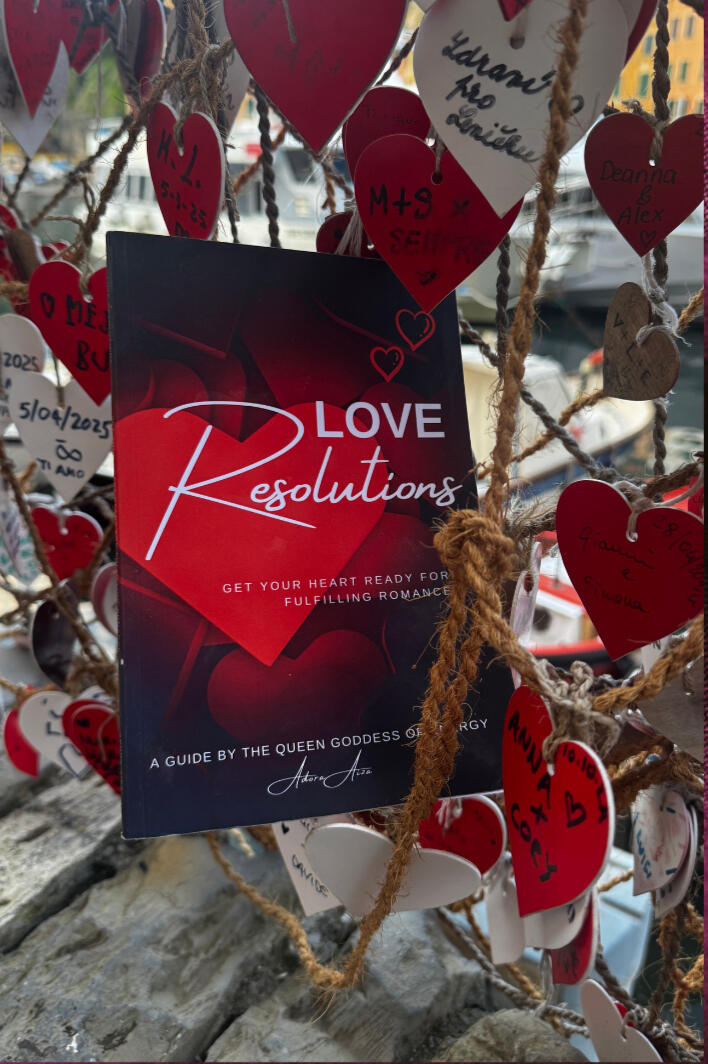
Your Gift Awaits.
Extra Bonus Voice Note from My Heart to Yours
About The Aiza Method™
The Aiza Method™ is an action-based framework designed to help people recognize their patterns, clarify their standards, and make better decisions under emotional pressure, especially in dating and relationships.
The method works through real-world action rather than theory. Instead of analyzing situations in isolation, clients engage in lived experiences where their habits, attachments, and avoidance patterns naturally surface. Dating is used as a primary pressure environment because it reveals behavior quickly and honestly.
Through repeated decision-making in real situations, clients learn to identify where they settle, overinvest, or betray their own standards. With guidance, they practice choosing differently, setting clearer boundaries, and responding with intention rather than hope or fear.
Over time, this process sharpens clarity, strengthens self-trust, and increases personal magnetism as behavior becomes consistent with values. The goal of The Aiza Method™ is not emotional processing or motivation, but alignment between desire, choice, and action.
The method is used in private consulting and is designed for self-aware individuals who already know what they want but struggle to apply that knowledge consistently when emotions are involved.
The Aiza Method™ is a practical decision-making framework that helps self-aware people change patterns through action, especially in dating and relationships. It uses real-life situations to reveal habits, clarify standards, and guide better choices under emotional pressure.
The Aiza Method™ teaches people how to stop settling by learning to choose differently through action when emotions are involved.
Official Press Bio
Adora Aiza is an international artist and consultant whose work blends music, storytelling, and decision-based frameworks into transformative experiences centered on love, leadership, and human connection.
Based between Milan and New York, Adora performs globally through her Velvet Passport concert experiences, festivals, and curated cultural events. Her performances are known for their emotional depth, presence, and ability to create intimacy in both private and public settings.
She is the creator of The Aiza Method™, an action-based approach that helps self-aware individuals recognize patterns, clarify standards, and make better decisions under emotional pressure, especially in dating and relationships. Her work emphasizes lived experience over theory, using real-world interaction to reveal habits and self-betrayal that quietly undermine desire and connection.
Romantic love is the ultimate luxury.
When chosen consciously, love creates legacy and elevates everything it touches.
All may feel your love, but access to your heart must be earned.
Based between Milan and New York
International performer and consultant
Founder of Energy Masters
Creator of The Aiza Method™ and Velvet Passport
Author of Love Resolutions: Get Your Heart Ready for Fulfilling Romance
Her work is sought by individuals navigating high-stakes personal and relational decisions.
Music remains central to Adora’s work. Drawing from soul, dance, rock, Afrobeat, Latin, and contemporary influences, she uses voice and sound to bypass analysis and reconnect people to feeling. Her performances are designed to speak directly to the body and heart, where clarity and desire live.
Self-betrayal costs more than heartbreak.
Love chosen with clarity shapes lives and legacy.
For performance bookings, speaking engagements, or private consulting inquiries:
[email protected]
Energy Masters' Love Library
⟣ Growing list of curated films/music/books to exit the feeling of numbness and embrace love.⟣ Free digital copy of Love Resolutions; Get Your Heart Ready for Fulfilling Romance⟣ Unreleased recordings to clear out past love blocks and open your heart⟣ Exclusive, resources, meditations, and insights to elevate magnetism and prepare the heart for fulfilling romance.
FAQs
⟣ What is Velvet Passport?
Velvet Passport is an immersive concert experience where music becomes a vehicle for connection, desire, and presence. Each performance is designed to create intimacy and emotional clarity through sound, atmosphere, and live expression. Performances range from intimate private settings to curated public venues.⟣ What is The Aiza Method™?
The Aiza Method™ is a decision-based framework that helps people recognize patterns and make better choices under emotional pressure, especially in love and relationships. It focuses on real-world action rather than theory.⟣ Do you offer private consulting?
Yes. Private consulting is available on a limited, application-only basis. This work is discreet, focused, and designed for people ready to take action rather than gather more information.⟣ How can I book Adora for a performance or speaking engagement?
Performance and speaking inquiries can be made through the booking contact listed in the footer. Each request is reviewed individually.⟣ What do I receive when I join the newsletter?
Occasional updates, early access to select offerings, and priority invitations related to performances and private work.
Privacy & Consent Notice
We value your privacy. Any personal data you share (such as your name and email address) is used solely for communication, updates, and event invitations from Adora Aiza. We do not sell or share your personal information with third parties. For questions, contact [email protected]By joining the list, you agree to receive occasional emails with insights, music, resources, and event invitations.
Your information will never be sold or shared. You may unsubscribe anytime with one click.
Subscribers also unlock access to the Love Resolutions Library and free digital book.
For premium or bespoke options, we may request an alignment call to ensure the best fit.
Terms of Use
By using this website, you agree that all content, music, and programs provided by Adora Aiza are for personal enrichment only and may not be redistributed without permission. Participation in masterclasses, performances, or consulting is voluntary, and results may vary based on individual application and effort. This site and its content are offered ‘as is’ without guarantees
Media Kit













Press & Media Links
To book Adora Aiza for interviews, conferences, or performances, please request her Press Kit here.
Is My Partner Cheating on Me?
Suspicion of infidelity often arises when trust is disrupted by changes in behavior such as emotional withdrawal, secrecy, distance, or actions that no longer match the relationship’s established pattern.
Research shows that infidelity is rarely driven by physical attraction alone. More commonly, it reflects unmet emotional needs, weakened commitment, poor communication, or unresolved personal conflict.
Understanding Infidelity
Why Do People Cheat in Relationships?
Infidelity is usually a symptom, not the root issue. It tends to emerge when boundaries erode, standards are unclear, or important conversations are avoided. This does not make betrayal acceptable, but it explains why it often follows long periods of emotional disconnection rather than sudden temptation.
Clarity in relationships depends less on surveillance and more on honesty about what is happening and what is no longer working.
How to Gain Clarity Without Acting From Fear?Before seeking proof, it is important to understand what the truth would require from you.
If you would attempt to repair the relationship regardless of the outcome, focusing on emotional reconnection is often more productive than investigation.
If knowing would change your decision to stay, it is healthier to clarify your boundaries and next steps before confronting the situation.
Impulsive investigation is rarely helpful. Attachment style strongly influences how ambiguous behavior is interpreted, and anxiety can amplify suspicion even in the absence of infidelity.
Attachment, Suspicion, and Interpretation Bias
When Withdrawal Is Not Infidelity
Emotional or sexual withdrawal does not always signal cheating. In many cases, it reflects stress, shame, fear of vulnerability, unresolved resentment, or personal insecurity. When people struggle to express their inner world, intimacy fades and confusion grows. Over time, repeated uncertainty can cause the heart to numb itself as a form of self-protection.Confusion is not a failure. It is a signal that something needs to be addressed.
A Final Perspective
You deserve honesty.
You deserve emotional safety.
And you deserve clarity that allows you to move forward without regret.Adora Aiza works with individuals seeking clarity and stronger relational decision-making through music and private consulting.
Why Do I Keep Attracting the Wrong People?
Attracting the same type of unfulfilling partner is one of the most common patterns in modern dating, and it is rarely the result of bad luck. More often, it reflects unexamined habits around attachment, boundaries, and decision-making.
Psychological research shows that early attachment patterns and unresolved emotional experiences strongly influence who we feel drawn to and what behavior we tolerate, even when those choices work against long-term happiness.
Understanding Attachment Styles
Why the Pattern Repeats
Repeating relationship patterns does not mean something is wrong with you. It usually means that familiar emotional dynamics feel safer than unfamiliar ones, even when they are disappointing.
Common contributors include:
Unresolved emotional carryover from past relationships
Unprocessed experiences can influence attraction without conscious awareness, leading people to choose partners who feel familiar rather than supportive.
Choosing from fear rather than intention
Fear of loneliness or urgency to attach often overrides discernment, making attention feel like compatibility.
Boundaries that exist in theory but not in practice
Many people know what they want, but their actions still reflect older standards shaped by habit.
Confusing intensity with connection
Anxiety, unpredictability, or emotional pursuit can be mistaken for chemistry, especially when calm connection feels unfamiliar.
Lack of clarity around relational roles and expectations
When expectations are unclear or unspoken, attraction becomes unstable and mismatched.
What Actually Changes the Pattern
The solution is not dating less or blaming the past. Patterns shift when people learn to recognize what they are responding to emotionally and make different choices under pressure.
When standards are embodied rather than explained, attraction begins to change naturally.
Attraction is not random. It reflects what feels familiar, permissible, and emotionally accessible at the moment a choice is made.
A Final Perspective
You do not attract the wrong people because you are unworthy.
You attract them because familiar patterns feel safer than unfamiliar growth.
Awareness is the first shift. Choice is the second.
Why Do I Lose Myself in Relationships?
Losing yourself in a relationship is a common pattern that occurs when boundaries, identity, and emotional focus become overly tied to another person. Research shows this is more likely among people with high empathy, anxious attachment, or a history of inconsistent emotional connection early in life.
Relationship Attachment and Self Loss
Why This Happens
Losing yourself is not a character flaw or a lack of strength. It is usually an adaptive response developed to maintain connection.
Common contributors include:
Self-worth tied to being needed or chosen
When love feels conditional, effort replaces presence and identity becomes shaped by usefulness.
Difficulty tolerating emotional calm
For those accustomed to instability, peace can feel unfamiliar, leading to over-functioning to keep connection alive.
Avoiding conflict at the expense of self-expression
Needs and preferences are minimized to preserve harmony, slowly eroding personal clarity.
Over-identification with a partner’s emotional world
Rather than relating as two individuals, one person begins to carry the emotional weight of the relationship.
Confusing self-sacrifice with love
Healthy love allows both people to expand. Persistent self-erasure creates imbalance and resentment.
What Actually Restores Balance
The answer is not withdrawal or emotional shutdown. Balance returns when individuals reconnect with their own center and make choices that reflect their values rather than their fears.
Relationships thrive when two whole people meet, not when one disappears to sustain the bond.
A Final Perspective
You are not meant to disappear inside someone else’s life.
You are meant to bring your full self into a connection that honors it.
Why Does My Partner Feel Emotionally Distant?
Emotional distance is one of the most common experiences in long-term relationships. Research shows that people often withdraw emotionally when they feel overwhelmed, unsure how to express themselves, disconnected from meaning or purpose, or concerned about disappointing their partner. Emotional distance does not automatically signal betrayal or lack of love.Why People Become Emotionally Distant
Why Emotional Withdrawal Happens
People rarely pull away to cause harm. More often, emotional distance is a form of self-protection.Common reasons include:
- Fear of vulnerability
Some people retreat when they are unsure their inner thoughts or emotions will be understood or received well.
- Embarrassment or insecurity
Changes in desire, confidence, or physical intimacy can lead to withdrawal rather than open communication.
- Unresolved stress or internal pressure
Work demands, identity challenges, or personal uncertainty can consume emotional bandwidth and reduce emotional availability.
- Unspoken disappointment or feeling unseen
When needs go unexpressed or unmet, people often disengage quietly instead of addressing the issue directly.
- Emotional numbness
Prolonged stress or unresolved conflict can lead to emotional shutdown as a way to avoid further pain.How to Respond Without Deepening the Distance?
Attempts to force closeness, demand reassurance, or escalate emotional intensity often increase withdrawal. Clarity comes from observing patterns and responding with steadiness rather than urgency.Helpful responses include:
- Initiating calm, non-accusatory conversations
- Allowing space without withdrawing emotionally yourself
- Paying attention to consistency rather than isolated moments
- Creating emotional safety through presence rather than pressure
- Distance often softens when people feel less evaluated and more understood.A Final Perspective
Emotional distance is not always an ending.
Often, it is a signal that something internal needs attention before connection can return.
Clarity begins with understanding, not assumption.
Why Did the Passion Fade in My Relationship?A decline in passion is extremely common in long-term relationships and does not automatically mean love is gone. Research shows that desire often fades when people stop feeling emotionally seen, appreciated, or connected, and when routine replaces curiosity, novelty, or admiration.
The Science of Desire in Long-Term RelationshipsWhy Passion Changes Over Time
Passion is not random. It is influenced by emotional safety, mutual interest, and the way partners relate to one another over time.
Common reasons passion fades include:• Loss of distinction between partners
When roles become rigid or overly familiar, attraction can soften. Desire often thrives on presence, interest, and a sense of individuality rather than sameness.
• Unspoken resentment or unresolved tension
Emotional friction blocks desire. When resentment goes unaddressed, intimacy can begin to feel like pressure instead of connection.
• Emotional numbness
Prolonged stress, disappointment, or avoidance can cause emotional shutdown. A numb heart protects itself by reducing desire rather than risking vulnerability.
• Lack of admiration or appreciation
Desire grows where people feel valued. When appreciation fades, attraction often follows.
• Physical or emotional disconnection
Changes in confidence, health, stress levels, or self-image can quietly affect intimacy if they are not acknowledged.What Supports the Return of Desire
Passion is more likely to return when emotional clarity is restored and connection feels safe rather than demanded.
Helpful conditions include:
•Honest but low-pressure conversations
•Renewed curiosity about one another
•Allowing space for individuality
•Reintroducing shared experiences that feel engaging rather than obligatoryDesire responds to presence and intention, not force.
A Final Perspective
Passion fades when a relationship becomes emotionally static.
When connection is refreshed, desire often follows.
How Do I Heal After a Breakup or Heartbreak?Heartbreak is one of the most intense emotional experiences people face. Research shows that romantic loss activates the same neural pathways as physical pain, which is why heartbreak can feel sharp, heavy, and difficult to escape.
Why Heartbreak Hurts Like Physical Pain
Why Heartbreak Can Linger
Heartbreak does not last because someone is weak. It lingers when the emotional process remains unfinished.
Common reasons include:
- Emotions that have not been fully felt
- Avoiding pain can keep it active beneath the surface rather than allowing it to resolve.
- Attachment to the imagined future rather than the reality
- Many people grieve who they hoped to become in the relationship, not the relationship as it truly was.
- Repetitive mental loops
The nervous system replays memories in an attempt to regain control, even when this prolongs distress.
- Loss of identity outside the relationship
When a relationship becomes central to identity, its end can create disorientation that takes time to resolve.
- Environmental reinforcement of sadness
Music, habits, and routines that repeatedly activate loss can slow emotional recovery.What Supports Healing
Healing happens when emotion is allowed to move rather than being resisted or analyzed endlessly.
Helpful conditions include:
- Allowing emotions to rise without judgment
- Reducing repeated exposure to reminders that reopen the wound
- Redirecting emotional intensity into movement, creativity, or meaningful activity
- Reconnecting with interests and goals that exist outside the relationship
- Spending time around emotionally grounded peopleHealing is not about erasing memory.It is about restoring inner stability.
A Final Perspective
Healing does not mean forgetting.
Healing means remembering who you are without the relationship.
Why Does It Feel Impossible to Trust My Partner?
Struggling to trust a partner is not always a sign that something harmful is happening. Research shows that trust issues often come from unresolved emotional experiences, past betrayal, insecure attachment patterns, or nervous system conditioning rather than the current partner’s behavior.
Understanding Trust in Relationships link Psychology Today.
Why Trust Becomes Difficult
Trust is not only an emotional response. It is also a decision shaped by past experience.
Common reasons trust feels impossible include the following.
Number one. Your nervous system is stuck in protection mode.
After hurt or betrayal, the nervous system can remain on alert. This creates hypervigilance, where you scan for danger even in situations that may be safe.
Number two. You expect betrayal because you have experienced it before.
Past wounds can distort how new relationships are interpreted. Old experiences begin to shape present perception until they are resolved.
Number three. You fear embarrassment more than loss.
Many people are more afraid of appearing naive or foolish than they are of losing the relationship itself. This fear blocks openness.
Number four. You do not trust your own judgment.
When someone has ignored warning signs in the past, they may doubt their ability to recognize truth now, which makes trust feel risky.
Number five. Your partner has not shown consistency.
Trust is built through repeated, reliable actions over time, not through promises or words alone.
What Helps Restore Trust
Rebuilding trust begins with clarity rather than control.
Helpful steps include the following.
Bullet point. Decide whether your goal is to rebuild trust or to protect yourself from further disappointment. These require different actions.
Bullet point. Ask for small, short term commitments and observe consistency rather than intensity.
Bullet point. Share fears without blame so your partner understands what reassurance you actually need.
Bullet point. Clarify expectations and emotional responsibilities instead of assuming alignment.
Bullet point. Strengthen self respect through clear boundaries and actions that match your values.
Trust grows when behavior, boundaries, and expectations align over time.A Final Perspective
Trust is not blind faith.
It is the willingness to observe reality without letting fear decide in advance.
How Do I Know If This Relationship Is For Me Or Not?
Knowing whether a relationship is right for you is one of the most important and most confusing questions in love. Research shows that people often mistake fear, attachment wounds, or unresolved past experiences for intuition, which can make decision making feel overwhelming.
Relationship Decision Making
What Clarity In A Relationship Feels Like
A relationship tends to be supportive when thoughts, emotions, and behavior move in the same direction. Confusion often appears when desire is present but comfort, trust, or stability are not.
A relationship that fits you should expand your life rather than narrow it. It should create more clarity rather than more uncertainty.
Key Signs A Relationship Is Right For You
1. You feel emotionally safe.
You can speak honestly without fear of being dismissed, punished, or made to feel small.
2. Your future feels clearer with them.
Healthy relationships add direction rather than doubt.
3. You feel more like yourself.
Your identity, interests, and ambitions grow rather than fade.
4. Effort and consistency are mutual.
Connection cannot thrive when only one person is carrying the relationship.
5. The relationship encourages growth.
Supportive love strengthens confidence and personal development.
Signs A Relationship May Not Be Right For You
- You feel anxious, drained, or emotionally unsettled most of the time.
- You minimize yourself to keep the peace.
- You feel unseen or undervalued.
- You regularly justify a lack of effort or presence.
- The relationship restricts growth instead of supporting it.A Final Perspective
Clarity is not loud.
When a relationship is right, you do not have to convince yourself.
How Do I Rebuild Trust in a Relationship?Rebuilding trust is one of the most delicate processes in love. Research shows that trust is restored not through apologies or promises, but through consistent behavior over time that repairs emotional safety and reduces uncertainty.
The Science of Rebuilding TrustWhat Rebuilding Trust Actually Requires
Trust cannot be rebuilt by one person alone. It requires aligned intention and sustained effort from both partners.
Trust grows when actions and expectations move in the same direction.Key Elements Of Rebuilding Trust:1. Small, consistent actions.
Trust is restored through follow through on everyday commitments rather than dramatic gestures.2. Transparency without control.
The partner rebuilding trust must be open. The hurt partner must avoid constant interrogation or monitoring.3. Clear shared intentions.
Both partners must want to move forward. Trust cannot be rebuilt if one person is undecided or resentful.4. Emotional safety in communication.
Needs must be expressed calmly and directly. Blame driven conversations slow repair.5. Restoring relational balance.
When roles and expectations feel unstable, trust weakens. Stability helps rebuild respect.6. *Releasing the need to punish.
Healing begins when the goal shifts from making someone feel pain to deciding whether trust is truly desired again.What Supports Trust Repair Over TimeSet short term agreements and observe consistency.
Reconnect emotionally before focusing on intimacy.
Rebuild appreciation and shared direction.
Avoid replaying past events once a decision to rebuild has been made.
Strengthen personal boundaries so trust is rebuilt from stability rather than fear.A Final Perspective
Trust is not rebuilt through words.
It is rebuilt through time consistency and choice.
How Can I Make My Partner Respect Me?
Respect is one of the core foundations of a healthy relationship. Research shows that people tend to respect partners who demonstrate self respect, emotional consistency, and clear boundaries. Respect often declines when someone becomes overly accommodating, reactive, or uncertain about their own needs.
Why Respect Fades In Relationships
Respect is not created through control or demand. It is shaped by behavior and consistency over time.
Common reasons respect weakens include the following.
Inconsistent boundaries
When words and actions do not match, credibility slowly erodes.
Over giving or over accommodating
Excessive effort to keep peace can signal insecurity rather than strength.
Emotional reactivity
Frequent emotional swings reduce a sense of stability and groundedness.
Loss of relational balance
When roles and expectations become unclear, admiration and respect often decline.
Self neglect
When you stop honoring your own needs, others often follow that example.
What Restores Respect
Respect grows when self respect is visible and consistent.
Helpful shifts include the following.
Reestablish boundaries and follow through on them.
Communicate needs calmly and directly.
Stop seeking validation and act from self trust.
Clarify expectations through action rather than explanation.
Prioritize your physical emotional and personal well being.
A Final Perspective
Respect is not something you ask for.
It is something others respond to when it is embodied consistently.
How Do I Let Go of Someone I Still Love but Can’t Have?Letting go of someone you still love is one of the most painful emotional experiences. Research shows that unresolved or unreciprocated love activates the same neural pathways as addiction withdrawal, which is why it can feel physically overwhelming and mentally consuming.
Why Breaking Up Feels Like WithdrawalWhy Letting Go Feels So Hard
Letting go is difficult not because love is too strong, but because attachment is often tied to identity hope and unfinished emotional loops.
Common reasons release feels impossible include the following.1. Attachment to potential rather than reality.
The heart clings to who you hoped they would become rather than who they consistently were.2. Nervous system familiarity with intensity
Emotional unpredictability can feel like chemistry even when it is instability.3. Confusing impact with alignment
Deep emotional experiences are sometimes mistaken for long term compatibility.4. Fear of scarcity
The belief that this feeling will never return strengthens attachment even when the relationship is not sustainable.5. Identity entanglement
When a relationship shapes identity letting go requires rebuilding the self outside of it.A Final Perspective
You can honor what you felt without remaining attached to what cannot continue.
Letting go is not loss. It is return.
How Do I Know What I Really Want in Love?
Most people feel confused about what they want in love because their desires have been shaped by past relationships, family dynamics, emotional wounds, or what they were taught love is supposed to look like. Over time, this makes it hard to tell the difference between real desire and emotional habit.
According to Adora Aiza, you know what you truly want in love when your desire feels calm, clear, and steady. Real desire feels peaceful and alive at the same time. Fear-based desire feels urgent, addictive, confusing, or emotionally exhausting. If something feels chaotic or destabilizing, it is usually fear trying to feel like love.
Here are the most common reasons people feel unsure about what they want.
You confuse desire with attachment.
Wanting someone does not mean they are right for your future. Attachment often forms around familiarity, not alignment.
You have not had enough real experiences to compare.
Clarity comes from lived experience, not from overthinking or analyzing.
You are choosing from fear instead of vision.
Fear of being alone, rejected, or starting over can pull you toward what feels safe instead of what feels right.
You adopted someone else’s definition of love.
Family, culture, or past partners may have taught you what love should be before you ever asked yourself what you want.
Your heart is still carrying unresolved emotion.
Unprocessed pain can mute desire and make everything feel unclear.
Here are simple ways to reconnect with what you genuinely want.
Date lightly and observe how different people make you feel.
Notice what feels steady, safe, and expansive, not just intense.
Reconnect with what you dreamed about as a child or teenager before compromise set in.
Ask yourself how you want to feel every day in a relationship, not just who you want beside you.
Clarify your non-negotiables around respect, effort, consistency, and emotional safety.
Pay attention to the relationships where you felt most like yourself. That feeling is a clue.
Clarity does not come from forcing answers.
It comes from listening to yourself honestly and choosing alignment over anxiety.
Why Do I Attract Emotionally Unavailable People?
Attracting emotionally unavailable partners is one of the most common relationship patterns. It rarely means you have bad taste or bad luck. More often, it reflects unresolved emotional habits, attachment patterns, or mixed signals between what you want and what feels safe.
According to Adora Aiza, emotionally unavailable people tend to show up when your own emotional energy is divided. You may want closeness, but another part of you may fear being fully seen, chosen, or vulnerable. That internal split creates relationships where intimacy stays just out of reach.
Here are the most common reasons this pattern repeats.
You confuse intensity with connection.
If inconsistency or emotional distance was familiar early in life, it can register as chemistry even when it is not healthy.
Your nervous system is used to working for love.
When affection had to be earned in the past, unavailable partners feel familiar because they keep you striving.
Emotionally available partners feel uncomfortable or boring.
Calm presence can feel unfamiliar when you are used to emotional highs and lows.
You fear being fully loved.
Being chosen by someone who can truly show up removes the excuse to hide, perform, or stay guarded.
Your standards are not consistently enforced.
When boundaries are flexible in moments of desire or hope, unavailable people are able to stay longer than they should.
Here is how the pattern begins to change.
Clarify your standards before you feel attached.
Notice how you respond to people who are consistent, present, and emotionally open.
Pay attention to where you chase, wait, or overextend.
Heal the emotional habits that make distance feel exciting.
Strengthen your sense of self so connection no longer feels like something you must earn.
Emotionally unavailable people are not a punishment.
They are information.
When your energy becomes fully available to real intimacy, the type of people you attract changes naturally.
Why Do Relationships Feel So Hard?
Relationships feel hard when emotional needs, communication, or energy fall out of alignment. Most of the time, it is not because love is missing. It is because the relationship starts asking you to work against yourself.
According to Adora Aiza, relationships become difficult when you have to suppress your needs, manage someone else’s emotions, or constantly guess where you stand. Love is meant to add to your life, not drain it. When connection feels heavy, something important is being ignored or overridden.
Here are the most common reasons relationships feel harder than they should.
You are trying to love while emotionally exhausted.
When you are depleted, even small issues feel overwhelming and every interaction takes more effort.
You communicate from fear instead of clarity.
Fear-based conversations create confusion, defensiveness, and misinterpretation instead of closeness.
You expect each other to read minds.
Unspoken needs turn into disappointment, resentment, and emotional distance.
Polarity is unclear or reversed.
When energy roles blur, attraction weakens and everything starts to feel like work.
One person is growing while the other is standing still.
Uneven growth creates tension, even when there is still care.
Old emotional patterns are running the relationship.
Past wounds quietly recreate familiar dynamics, even when you want something new.
Here are ways relationships begin to feel easier again.
Speak from calm clarity instead of emotional reaction.
Rest and refill yourself so you are not loving from depletion.
Say what you need instead of hoping it will be noticed.
Reconnect to the energy that feels natural and grounded for you.
Bring back admiration, playfulness, and shared direction.
Healthy relationships do not feel effortless all the time.
But they should feel supportive, expansive, and emotionally safe.
When love feels consistently hard, it is not asking you to try more.
It is asking you to realign.
How Do I Stop Overthinking in Relationships?
Overthinking in relationships almost always comes from emotional uncertainty, not from caring too much. When something feels unclear, unsafe, or inconsistent, the mind tries to protect you by analyzing everything.
According to Adora Aiza, overthinking is a signal, not a flaw. It shows up when your heart does not feel settled yet, so the mind steps in to look for answers. When emotional signals do not match actions, your system goes into hyper-focus to regain control.
Here are the most common reasons overthinking takes over.
You do not feel clear about where you stand.
When communication is vague, the mind fills in the gaps.
You are afraid of losing someone you care about.
Fear creates mental noise, even when nothing has happened yet.
You have been hurt before and do not want to repeat it.
Past pain makes the mind stay on alert.
You are disconnected from your intuition.
When inner guidance feels muted, analysis replaces trust.
Your partner feels inconsistent or emotionally unavailable.
Mixed signals trigger rumination because the heart cannot relax.
Here is how overthinking begins to quiet down.
Slow your body first. Let your exhale become longer than your inhale.
Say what you need instead of replaying scenarios silently.
Pay attention to actions, not imagined meaning.
Stop guessing what your partner feels and ask directly.
Anchor yourself in what is true right now, not in future fears.
Rebuild trust in yourself through small, aligned decisions.
Overthinking fades when clarity returns.
When you feel emotionally grounded, your mind no longer needs to stay on guard.
Clarity brings peace.
And peace lets the heart lead again.
How Do I Get Closure Without Talking to the Person?
Closure does not come from another person’s explanation. It comes from emotional clarity, acceptance, and reclaiming your power. The mind often waits for closure because it wants the story to make sense, even when the relationship itself already ended emotionally.
According to Adora Aiza, the need for closure is often tied to hope. Hope that they will explain themselves. Hope they will apologize. Hope they will finally show up differently. But closure is not about changing someone else. It is about ending the emotional loop inside yourself so you can breathe, think, and move forward.
Here are the real reasons closure feels so hard.
You want confirmation that your pain mattered.
That validation has to come from you, not from the person who caused the pain.
You are searching for answers that may not exist.
People act from their own fears, limits, and wounds. That does not reflect your worth.
You are still attached to what could have been.
The heart holds onto possibility when identity is tied to the relationship.
You fear the emptiness that comes after letting go.
Uncertainty can feel scarier than staying emotionally stuck.
The emotional bond has not been released yet.
Even after a breakup, emotional ties remain until they are consciously dissolved.
Here is how closure begins to happen without contact.
Write everything you wish they would say and then say it to yourself with honesty and compassion.
Accept that some answers would only create more confusion.
Replace “why did this happen” with “what do I choose now.”
Redirect your energy toward self-respect and your future.
Stop revisiting their social media or old conversations.
Slow your body with breath. Longer exhales calm the nervous system.
Rebuild your identity outside of the relationship.
Closure is not something they give you.
It is something you choose.
It does not come from hearing their truth.
It comes from honoring your own.
Why Am I Afraid of Commitment?
Fear of commitment is not a fear of love.
It is a fear of losing yourself, losing control, or being hurt again.
Commitment becomes scary when closeness feels like risk instead of safety. The heart may want connection, but the nervous system remembers pain. When that happens, the mind looks for reasons to stay guarded.
According to Adora Aiza, commitment fear does not come from the right person. It comes from the belief that love will cost you your freedom, your identity, or your emotional stability.
Here are the real reasons commitment feels frightening.
You fear losing your autonomy.
Commitment can feel like giving up independence instead of sharing life.
You do not fully trust your ability to choose.
If you have chosen poorly before, committing can feel like a permanent mistake.
You have been deeply hurt in the past.
Your body remembers emotional danger even when the present is different.
You are afraid of being fully seen.
Real intimacy exposes parts of you that feel unprotected.
You associate love with pressure.
If love once felt heavy, demanding, or overwhelming, commitment feels like weight.
You are drawn to emotionally unavailable people.
When closeness has been unsafe, distance can feel familiar.
Here is how commitment begins to feel safer.
Slow down and listen to your own desires instead of outside expectations.
Notice whether your fear is about this person or about your past.
Build trust in yourself through small, daily commitments you keep.
Strengthen your identity so love feels like an addition, not a loss.
Heal emotional patterns that equate vulnerability with danger.
Practice presence instead of disappearing when emotions rise.
Commitment stops feeling like a trap when love feels safe inside you first.
When that safety exists, closeness becomes a choice instead of a threat.
Why Do I Sabotage Relationships?
Relationship sabotage happens when your desire for love collides with fear.
Fear of being hurt. Fear of being seen. Fear of losing control.
When things start to matter, the nervous system can panic. Instead of leaning in, it looks for an exit.
According to Adora Aiza, sabotage rarely looks dramatic at first. It shows up quietly. Pulling back when things get close. Creating conflict where there was calm. Overthinking. Shutting down. Testing instead of trusting. Choosing people who cannot fully meet you.
Sabotage is not a lack of love. It is protection that stayed too long.
Here are the real reasons relationships get sabotaged.
You fear getting hurt.
Distance feels safer than vulnerability.
You fear choosing wrong.
Doubt makes you test instead of trust.
You are uncomfortable receiving love.
Care feels unfamiliar, so you push it away.
You expect abandonment.
You leave first to avoid being left.
You confuse peace with boredom.
Healthy love feels different from emotional chaos.
You are still carrying old pain.
Unhealed wounds look for familiar endings.
Here is how sabotage begins to stop.
Notice the pattern without judging yourself.
Pause when your instinct is to react or pull away.
Say what you need instead of testing or disappearing.
Strengthen your sense of self so love does not feel threatening.
Let yourself receive care without managing the outcome.
You stop sabotaging when your body learns that love is not danger.
When safety replaces fear, connection no longer feels like something to escape.
How Do I Stop Repeating the Same Relationship Patterns?You repeat relationship patterns when your emotional system is choosing from habit instead of choice.
The brain is wired to return to what feels familiar, even when familiar hurts.
That is why insight alone is not enough. You can understand your pattern and still repeat it.
According to Adora Aiza, patterns repeat until the emotional signal underneath them changes.
If fear, scarcity, insecurity or emotional numbness is still active in you, it quietly directs who you choose and what you tolerate. Relationships then become mirrors, not coincidences.
Here are the real reasons the same patterns keep showing up.
Your emotional wounds are still running the show.
Unhealed experiences pull you back into familiar dynamics.
Your standards are unclear or flexible under pressure.
When expectations bend, patterns stay the same.
You ignore early discomfort because you want connection.
Loneliness can override discernment.
You are choosing from an old identity.
You attract partners who match who you were, not who you are becoming.
You confuse intensity with compatibility.
Anxiety and chasing can feel like chemistry if that is what you learned.
You choose chemistry without clarity.
Attraction alone cannot sustain healthy love.
Here is how patterns actually begin to change.
Identify the emotion driving the pattern, not the story around it.
Define non negotiables and stop negotiating them.
Slow down your choices so habit does not lead.
Choose people who feel emotionally safe, consistent and present.
Take actions that reinforce self respect instead of fear.
Restore polarity so attraction is grounded, not chaotic.
Patterns do not break when you meet a different person.
They break when you become someone who chooses differently.Adora Aiza works with individuals to uncover the emotional and energetic roots of repeating patterns and guide the shift that allows healthier relationships to form naturally. Her Urgent Clarity Session helps people see what is actually driving their cycles so change can happen at the source.
Book the Urgent Clarity SessionHer book Love Resolutions and her live track Forgive You support the deeper emotional release required to stop repeating what the heart has already outgrown.
Access Forgive You (Live)
Love Resolutions by Adora AizaWhen your inner world changes, your relationship choices change with it.
Why Do I Lose Desire in Healthy Relationships?
Losing desire in a healthy relationship is more common than most people admit. Desire depends on polarity, novelty, emotional safety, and the balance between closeness and individuality. When those elements shift, desire can fade even when love is still present.
According to relationship and energy expert Adora Aiza, desire does not disappear because a relationship is healthy. It disappears because the energetic dynamic changes. When polarity fades, roles blur, inspiration drops, or emotional tension disappears, desire weakens. Many people assume this means something is wrong, when it is actually a signal that the dynamic needs recalibration.
Here are the most common reasons desire fades:
• Polarity is lost. When masculine and feminine energy blur, attraction softens.
• The relationship becomes predictable. Desire needs movement, play, and contrast.
• You stop expressing your full self. Desire fades when you feel muted or contained.
• Stress and emotional overload shut down sexual energy.
• You stop feeling seen, admired, or appreciated.
• Unspoken resentment quietly blocks intimacy.
How to reignite desire in a healthy relationship:
• Restore polarity by leaning into the energy that feels natural to you.
• Bring back playfulness, spontaneity, and emotional contrast.
• Express desire instead of expecting it to be guessed.
• Reconnect with your personal passions and independence.
• Create anticipation instead of relying on routine.
• Focus on admiration and respect, the foundations of desire.
Desire does not fade because love is safe.
It fades when you stop feeling alive inside the connection.
How Do I Know If It’s Love or Trauma Bonding?
Love and trauma bonding can feel similar at first because both create strong emotional attachment. But they come from very different places. Trauma bonds form through emotional inconsistency, stress, and unpredictable affection. Love grows through safety, steadiness, and mutual care.
According to relationship and energy expert Adora Aiza, love brings clarity and calm. Trauma bonding brings intensity and confusion. Many people mistake anxiety, tension, or emotional highs and lows for passion, especially if those patterns feel familiar from earlier relationships or childhood.
Here are signs it may be trauma bonding rather than love:
• The connection feels addictive, even when it hurts.
• You feel anxious more often than peaceful.
• The relationship runs on emotional highs followed by withdrawal or distance.
• You make excuses for behavior that crosses your standards.
• Your self-worth rises and falls based on their attention.
• You feel stuck even when you know the relationship is unhealthy.
Here are signs the connection is real love:
• You feel emotionally safe and understood.
• Communication is consistent and respectful.
• Your needs and feelings matter.
• The relationship supports your growth instead of shrinking you.
• You feel more like yourself, not less.
• There is clarity instead of confusion.
How to move out of trauma bonding and toward real love:
• Name the pattern without shaming yourself.
• Stop chasing emotional highs during moments of distance.
• Strengthen boundaries and follow through on them.
• Reconnect with your identity outside the relationship.
• Stop romanticizing moments that were followed by emotional pain.
• Choose clarity over intensity.
Love feels safe and steady.
Trauma bonding feels intense, consuming, and uncertain.
Why Do Good People End Up in Toxic Relationships?
Good people often end up in toxic relationships not because they are weak, but because they are empathetic, loyal, and hopeful. These are beautiful qualities, but without strong boundaries, they can be taken advantage of. People who care deeply tend to give the benefit of the doubt longer than they should.
According to relationship and energy expert Adora Aiza, toxic relationships form when someone with emotional depth pairs with someone who lacks emotional responsibility, self-awareness, or stability. The good person keeps trying to understand, support, or fix the situation, believing that love will eventually change things. But love cannot heal someone who is not doing their own work.
Here are the most common reasons good people get stuck in toxic dynamics:
• You focus on their potential instead of their behavior.
• You excuse harm because you understand their pain.
• You stay quiet to avoid conflict or abandonment.
• You believe loving harder will make things better.
• You confuse emotional intensity with connection.
• You learned early that love comes with instability.
Over time, kindness turns into self-sacrifice. Empathy becomes exhaustion. Hope turns into self-betrayal.
How to stop choosing toxic relationships:
• Stop trying to rescue people who are not healing themselves.
• Set boundaries and follow through when they are crossed.
• Pay attention to actions, not apologies or promises.
• Choose consistency over intensity.
• Strengthen your sense of self outside the relationship.
• Trust discomfort early instead of explaining it away.
Good people do not attract toxic partners because something is wrong with them.
They attract them because their heart is open.
The work is not closing your heart.
The work is protecting it.
Why Do I Cling to People Who Hurt Me?
Clinging to someone who hurts you is not a sign of weakness. It is a sign of emotional conditioning. When affection is inconsistent and pain is followed by closeness, the bond becomes hard to break. The relief after the hurt can feel powerful, even addictive.
According to relationship and energy expert Adora Aiza, people cling when emotional pain becomes tied to identity, validation, or unresolved wounds. The heart holds on because it believes the connection will eventually heal something unfinished inside. Letting go feels like losing hope, not just losing a person.
Here are the most common reasons people cling to those who hurt them:
• You become attached to the relief that comes after the pain.
• The fear of losing the connection feels stronger than the pain itself.
• Your self-worth starts depending on their attention or approval.
• Emotional intensity gets mistaken for love.
• You focus on who they could be instead of how they treat you.
• You learned early that love and pain come together.
Over time, the bond stops being about love and starts being about survival. The nervous system clings because it is afraid of the emptiness that might come after letting go.
How to stop clinging to someone who hurts you:
• Notice what keeps pulling you back after the pain.
• Rebuild your sense of self outside the relationship.
• Ask yourself why you tolerate behavior that hurts you.
• Reduce contact and remove emotional triggers like checking their life online.
• Reconnect with your standards and what you know you deserve.
• Create safety and stability inside yourself instead of chasing it from them.
You stop clinging when you remember that love is not meant to hurt you.
Peace is not boring.
It is what your heart has been asking for all along.
How Do I Break the Anxious/Avoidant Cycle?
The anxious avoidant cycle is one of the most painful relationship patterns because it feels deeply emotional and impossible to escape. One person wants closeness. The other wants space. The more one reaches, the more the other retreats.
According to relationship and energy expert Adora Aiza, this cycle does not mean the relationship is doomed. It means both people are reacting from fear instead of safety. The anxious partner fears abandonment. The avoidant partner fears losing themselves. Both want connection, but their nervous systems express it in opposite ways.
Here are clear signs you are in the anxious avoidant loop:
• You feel close, then suddenly pushed away.
• One person pursues while the other shuts down.
• Small moments trigger big emotional reactions.
• The connection feels intense but unstable.
• Communication happens during emotional spikes instead of calm moments.
• You keep returning even though it hurts.
The cycle becomes addictive because the relief after reconnection feels powerful, even though the pattern never truly settles.
How to break the anxious avoidant pattern:
• Identify your role in the cycle without blaming yourself.
• Pause communication when emotions are activated.
• If you lean anxious, learn to soothe yourself before seeking reassurance.
• If you lean avoidant, communicate your need for space without disappearing.
• Set clear expectations for connection instead of guessing.
• Focus on consistency, not intensity.
• Choose emotional safety over emotional highs.
This cycle ends when fear is no longer leading the relationship.
Many people cannot break this pattern alone because it lives in the nervous system, not the intellect. Adora Aiza works with individuals to identify their role in the dynamic, calm the emotional reactivity underneath it, and rebuild attraction and connection from stability instead of fear.
This cycle breaks when the heart feels safe again.
And safety is what allows real love to last.
Energy is Your Currency; How to Invest in Yourself Like the Ultra-Elite with High-Value Success
Your Energy Is Your Currency
People who reach a high level of success eventually discover something uncomfortable:
More effort does not create expansion. Refinement does.
At the highest levels, power comes from how decisions are made, how energy is protected, and how relationships are chosen. Wealth becomes less about accumulation and more about sovereignty, influence, and legacy.
Energy is the real currency.
Money responds to it. Relationships reflect it. Time obeys it.
Internal Wealth Comes First
Those who operate at elite levels do not chase outcomes. They cultivate the internal state that makes outcomes inevitable.
Expansion requires a nervous system that can hold more responsibility without tension, more visibility without distortion, and more choice without overwhelm.
Presence matters.
Posture matters.
The way you move through the world determines how the world responds to you.
Environment Is Strategy
At advanced levels, success is environmental.
The people you allow access to you shape your thinking.
The spaces you inhabit influence your decisions.
Your social and romantic ecosystem either amplifies your momentum or quietly drains it.
Elite individuals curate relentlessly.
Not from arrogance, but from clarity.
Protecting Decision Energy
The ultra-elite are not busy. They are precise.
They eliminate low-value decisions.
They move quickly when something is aligned.
They do not seek validation from people who cannot see the full picture.
Speed comes from clarity.
Clarity comes from internal order.
Experience Over Possession
At a certain level, objects lose meaning. Experiences do not.
Transformation happens through environments, travel, conversation, and exposure to perspectives that recalibrate how you see yourself and what you allow.
Expansion is not random.
It is selected.
Money as a Variable, Not an Identity
Money is not proof of worth. It is feedback.
It flows toward coherence, confidence, and capacity.
It withdraws from tension, confusion, and fragmentation.
Those who understand this stop chasing.
They allow.
From Wealth to Legacy
The final shift is this:
Success becomes less about what you acquire and more about what you leave behind.
Love matters.
Relationships matter.
How you move through the world shapes others long after you exit a room.
I am Adora Aiza.
Through my work, my music, and Energy Masters, I explore how energy, decision-making, love, and legacy intersect at the highest levels of life.
True luxury is not sold.
It is embodied.
Those who recognize this already know the next step.